
Pharmaceutical and supplements supply shock
The potential Hormuz impact on health

Since my last article, I have mostly focused on paying close attention to the non-linear dynamics of the war. After all, many of my geopolitical and conflict forecasts came to pass, all backed by previous evidence and just an ounce or two of common sense. A few days ago, someone asked me a rather significant question, the reason I am writing an article, instead of a reply, to help more people navigate this.
If you have been avoiding social media or just not paying attention to anything, a simple rundown of the US-Iran war. The US and Israel kept escalating, and Iran did exactly what it said it would do, in fact, it is astonishing how most of the West ignores Iranian threats, as they seem to do exactly what they state in press releases. Tit-for-tat in an asymmetrical way. In these escalation efforts, not only does the Strait of Hormuz remain closed, but Iran targets Qatar’s industrial city, Ras Laffan. Unlike oil, there are no substitutes for Ras Laffan, it is a critical global LNG export hub and choke point.
Iran's attacks on the industrial city took off almost 17% of its export capacity. It will take at least 3 years, according to the CEO, to rebuild and recover from the damage. Qatar also announced that other highly critical products from the region were similarly affected. Helium, aluminum, sulphur and urea. LNG is not just fuel. Methane, ethane, and propane from natural gas are the starting points for countless chemical intermediates (methanol, ammonia, ethylene, propylene) used to synthesize APIs.
To understand the perspective my analyses and assessments come from, what I am taking into account.
The current closure of the Strait of Hormuz
The systemic disruption in oil-producing nations in the Gulf
How long does it take to get production back, and start industry again
LNG disruptions, LNG exports stop entirely from the Gulf region in 9 days
The already seen shortages of gas, diesel, and petroleum byproducts in many nations
This matters a lot beyond the scope of my last article on The Fourth Option. Our entire civilization is built around petroleum and its byproducts, it is not simply a fuel source. A small list of the thousands of products that necessarily need petroleum or one of its byproducts (the academic term is petroleum derivatives) to be manufactured.
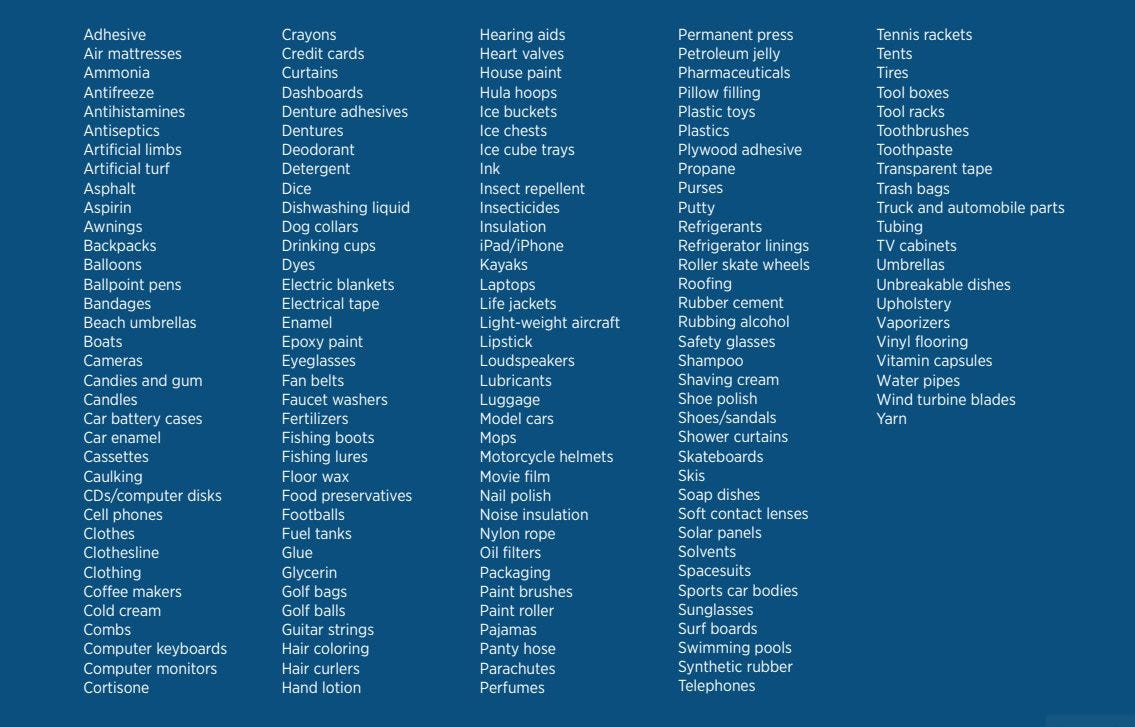
To our interest today, there are two angles. First, most drugs and supplements, be they vitamins, minerals or amino acids, these are all energy-intensive processes, they demand a lot of energy in their manufacturing processes. Secondly, many drugs necessitate petroleum byproducts to be manufactured at one step or another of their manufacturing. Even under the best circumstances, the supply shock will be severe, it will take months, or even start to deconstruct and understand it.
The goal here is simple. For you to avoid said supply shock, localized shortages and the inevitable bitter inflation, and make choices if you want to stock up on something, what could you possibly stock, what is more at risk, and what is not.
Two countries are considered the pharmacies of the world, providing the active ingredients (API) to produce untold amounts of drugs, generic and “brand” alike. China, and India. China has spent the best part of the last decade building its entire infrastructure to withstand an energy crisis, but it still relies on imports. Throughout the years, I covered many of the changes the government enacted to absorb the multiple smaller energy crises we went through, and it did affect the supply of some drugs, creating shortages. India, on the other hand, is entirely at the mercy of energy crunches.
Many countries will experience a plastic shortage, and that goes from plastic bags to IV bags, syringes, vials, and insulin pens, blister packs, gelatin capsules (low risk on this one), and glass vials. Sterilization processes will also suffer a significant cost pressure. Also, MRI needs helium for its cooling process, and there are many hospital already cutting their MRI numbers in half. If you or a loved one needs an MRI, you must get one as soon as possible. There is no fix here, talk to your healthcare provider and get one.
Below is a breakdown of the drugs that may suffer significant supply shocks, short-term shortages, and an increase in cost:
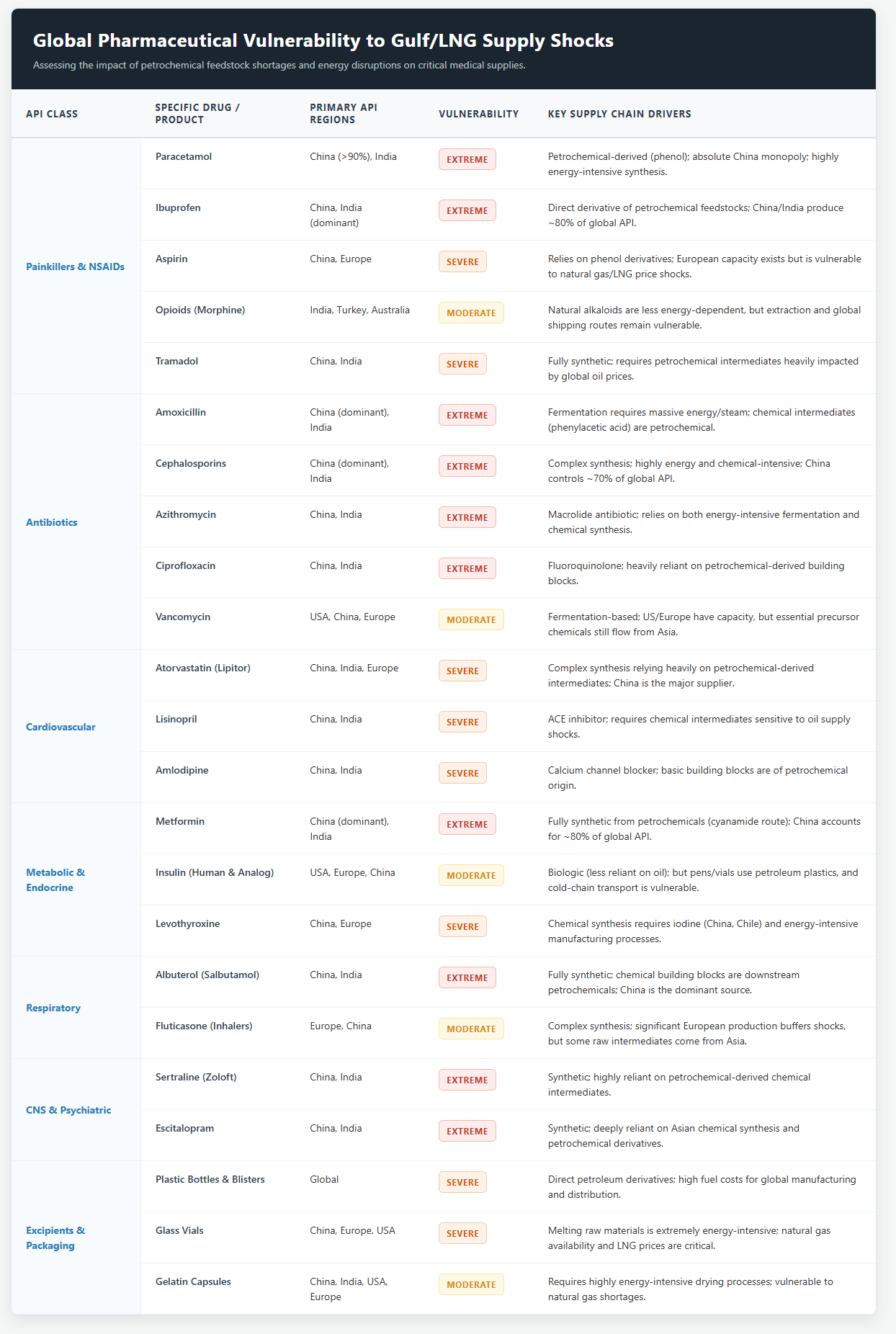
Methotrexate, a drug to treat cancer which has suffered a significant supply shock since 2023, will now experience further disruption. Many people's quality of life depends on access to certain drugs, and in an emergency, or their actual lives may depend on access to certain drugs because of their chronic conditions. With this, you have a simplified but broad map to what exactly you may want to stock up.
I am a big proponent of alternative means of health optimization and recovery from sequelae of infections, be it viral, bacterial, or fungal (with my main focus being the more systemic one, SARS-CoV-2). The goal here is avoiding any significant supply shock for the next few months, and avoiding the inevitable increase in prices, with a secondary goal of being prepared in case of sustained shortages.
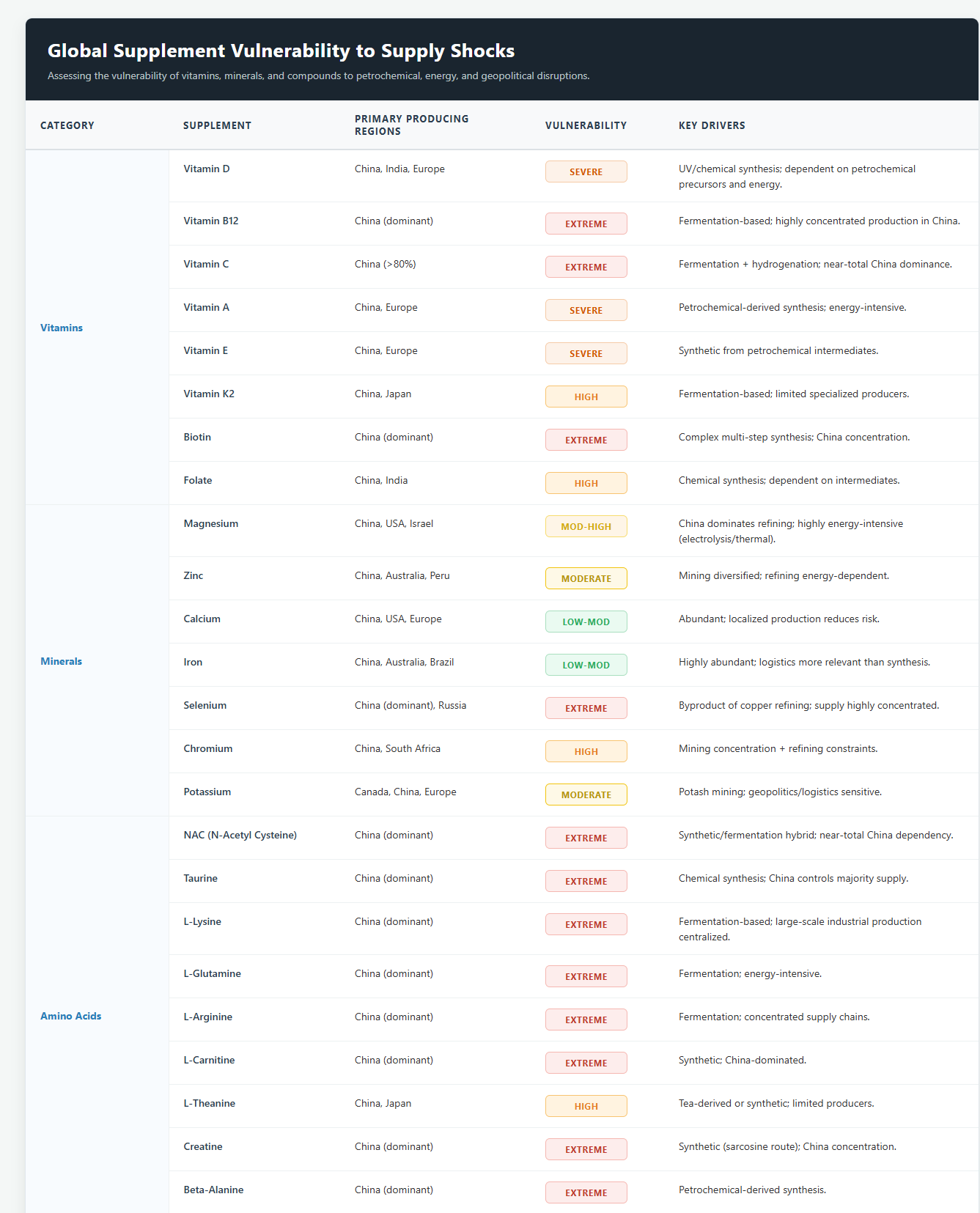
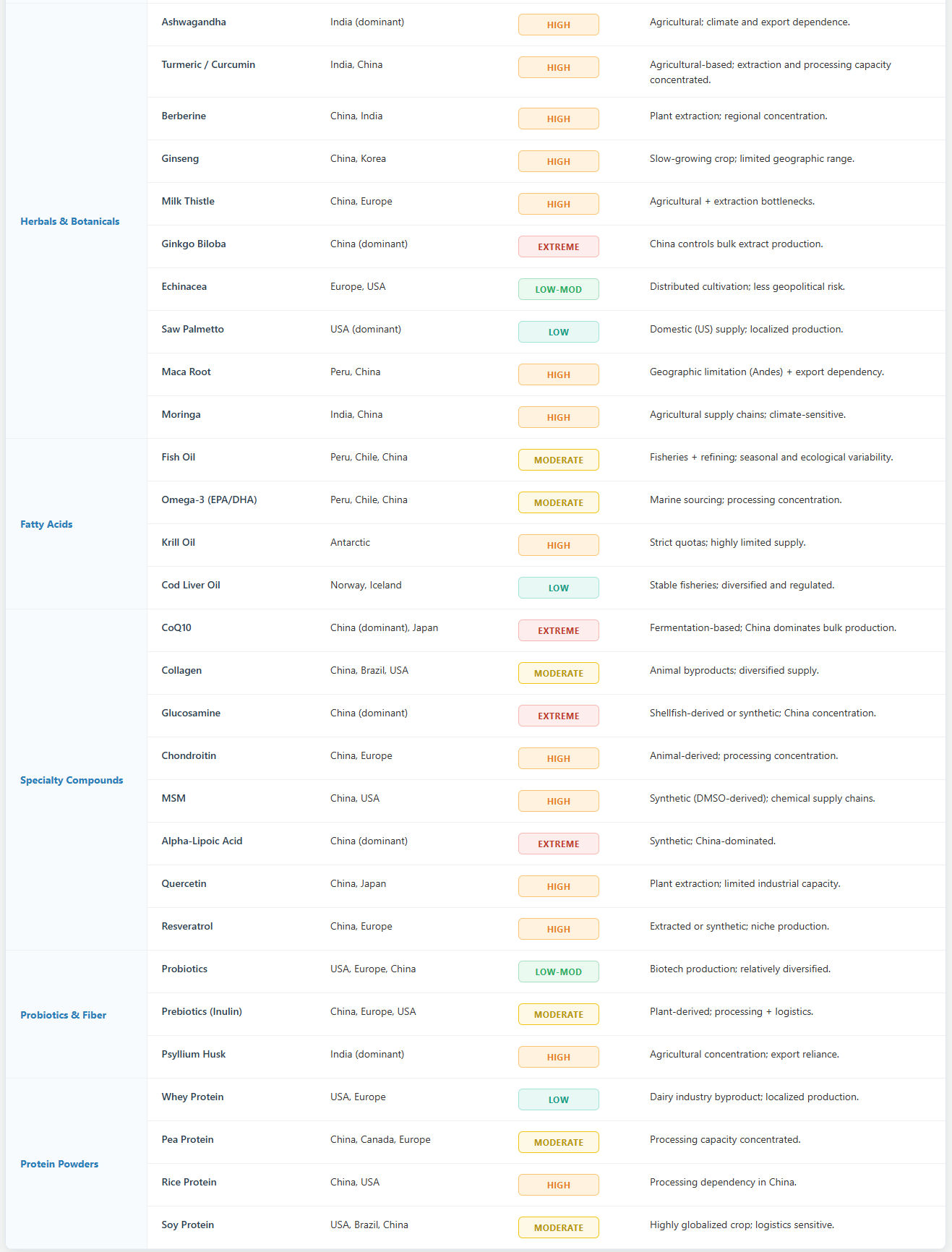
Focus on supplements that you see yourself actively using, or use right now. There is no point in spending a lot of money out of fear on things that will just go bad. Setting up a budget is a good way to limit yourself to buying supplements you will actually use.
While many minerals have alternative sources, and are mostly moderately exposed to supply shocks, the same can’t be said for the two other highly impactful supplement classes and main suggestions from me. Vitamins and, of special significance, amino acids.
There are many people who have a vitamin or mineral dependency, be it for life circumstances, genetics, chronic or severe infections, and to achieve normal health, they must supplement the specific nutrient (thus dependency, not deficiency). On the amino acid side, whether for recovery or optimization, many people use amino acids, and no amount of food in the world will give you supranutritional levels of these biochemicals.
Whatever your goal is, my suggestion is the same. Go through the list and identify what is critical for you. A Long Covid patient will have distinct needs compared to someone who just wants to recover from an infection or optimize health. Some supplements have a significantly higher mileage than others, such as the combination of Taurine, D-Ribose and Vitamin C, all of which can be bought in bulk for lower prices.
One of the supplements that I have most recommended in recent months, creatine, has sustained supply constraints and shortages for months. This is due to both demand and a shortage of its core raw materials. Creatine should be at the top of your list, 2 pounds of creatine are not overly expensive in most of the world, and it is highly beneficial at higher doses to combat many conditions. Together with taurine and whey protein, they are the best “bang for your buck”.
Lastly, the most impactful and the trend of the moment, not only in the healthcare space, but everywhere, especially in tech circles. Peptides. Peptides are under a systemically fragile supply risk because the vast majority of them are made in China (70%+), and if they are not manufactured in China, they necessitate petrochemical derivatives to produce, such as organic solvents, they also need resins and reagents, which are highly specialized production-wise, and need specialized labs.
Peptides are also an abnormally large trend right now, and demand has skyrocketed. Many clinics are making a lot of money from prescriptions and applications alone. I do not recommend buying peptides to stock for a rainy day. Identify your needs, buy peptides and use them for either recovery or for health optimization, and use supplementation to maintain that above baseline health level. The peptides market is somewhat unpredictable right now, unlike others.
Repeating myself, even if the disruption in the Strait of Hormuz was to be solved by tomorrow morning, the current dynamics remain at play. Whenever this ends, it will take weeks for each procuder to start producing oil again, more weeks for refinaries to pick up the pace (you can’t go from 0 to 100, it takes weeks), and the same for any industry that closes because it doesn’t has access to fuel or the price undercuts all of its profit, making operations impossible.
I hope this is informative and helpful for as many of you as it is possible.
If you are a supporter, thank you very much, your support is very much appreciated.

The focus of this article was on health-related supplements, drugs, etc. A lot of other items will suffer price increases, such as most non-natural textiles. Every day, there is an increased likelihood that chip manufacturing is deeply affected, not just because of helium, but Taiwan imports MOST of its energy.
If you can afford it, solar panels are a good way to hedge against energy inflation, but it can be a hefty investment.
If one wanted to make sure that the global population went into steep declines , cut off fossil fuels and fertilizers